
Our Pillars
EDUCATION • SCHOLARSHIP • SERVICE • LEADERSHIP
AAMS-UC is built around four pillars that prepare UCLA students to engage thoughtfully with medicine and surgery: research, hands-on skills, outreach, and professional development.
AAMS-UC provides students with an early, structured introduction to the clinical, academic, and human sides of medicine. Members develop technical familiarity through simulation, explore questions through research, serve communities beyond UCLA, and build relationships with physicians, trainees, researchers, and fellow students. Together, these experiences help members become more informed, capable, and service-oriented future healthcare professionals.

Hands-On Skills
Learning through structured simulation
Hands-on learning is at the center of the AAMS-UC experience. Through guided workshops and simulation-based skills labs, students develop familiarity with surgical instruments, anatomy, procedural sequences, teamwork, and the precision required in medicine and surgery.
Foundational Skills
-
Surgical knot tying
-
Instrument identification and handling
-
Simple interrupted and running sutures
-
Vertical and horizontal mattress sutures
-
Vessel ligation
-
Tissue handling
Cardiothoracic simulation
-
Cardiac anatomy and dissection
-
Coronary artery bypass grafting (CABG)
-
Aortic valve replacement
-
Atrial and ventricular septal defect repair
-
Congenital cardiac procedures
Clinical simulation
-
Airway management and intubation
-
Intravenous access and injections
-
Ultrasound exposure
-
Laparoscopic simulation


Research
Advancing education through inquiry
Research allows members to examine how students learn, how educational programs can improve, and how evidence shapes medicine and surgery. AAMS-UC incorporates outcomes tracking into selected activities and encourages members to approach surgical education with curiosity, reflection, and a commitment to improvement.
What this pillar includes
-
Evaluating confidence and technical performance before and after selected workshops
-
Developing posters, abstracts, and educational research projects
-
Learning how to review scientific literature and communicate findings
-
Connecting students with faculty, physicians, and research mentors
-
Exploring clinical, translational, surgical, and medical-education research
From practice to measurable progress
In one AAMS-UC workshop assessment, average knot-tying performance increased from approximately 9.6 to 21.0 knots per minute, while self-reported instrument-handling confidence increased from approximately 1.6 to 3.7 out of 5.
Professional Development
Preparing students for the path ahead
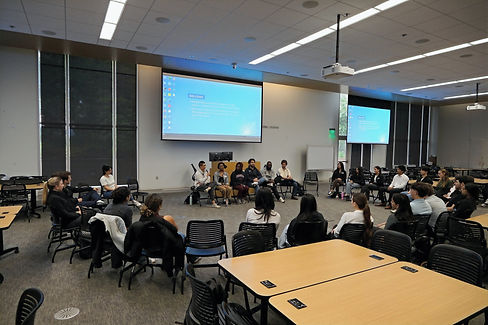
Technical exposure is most meaningful when paired with mentorship, reflection, and an understanding of the responsibilities of medicine. AAMS-UC helps members learn from professionals at different stages of training while developing the communication, leadership, and professional skills needed for future healthcare careers.
Grand Rounds and clinical education
Grand Rounds introduce members to medical specialties, patient cases, anatomy, clinical reasoning, new technologies, and the decisions physicians make before, during, and after treatment.
Morbidity and Mortality discussions
Educational M&M sessions examine complications, unexpected outcomes, systems issues, and opportunities for improvement. These discussions emphasize accountability, patient safety, teamwork, and thoughtful reflection.
Mentorship and career development
-
Conversations with physicians, surgeons, residents, and medical students
-
Guidance on clinical experience, research, and professional preparation
-
Exposure to different medical and surgical specialties
-
Leadership opportunities within AAMS-UC
-
Peer mentorship between returning and incoming members
-
Medical school and career-development resources

Outreach
Expanding access through service
AAMS-UC believes that exposure to medicine should extend beyond the organization itself. Through service and outreach, members share health education, support community needs, and help younger students explore careers in science, medicine, and healthcare.
What this pillar includes
-
Blood drives and health-focused service events
-
Educational outreach to local schools and student groups
-
Hands-on demonstrations for younger students
-
Service with older adults and community organizations
-
Partnerships that make healthcare exposure more accessible